
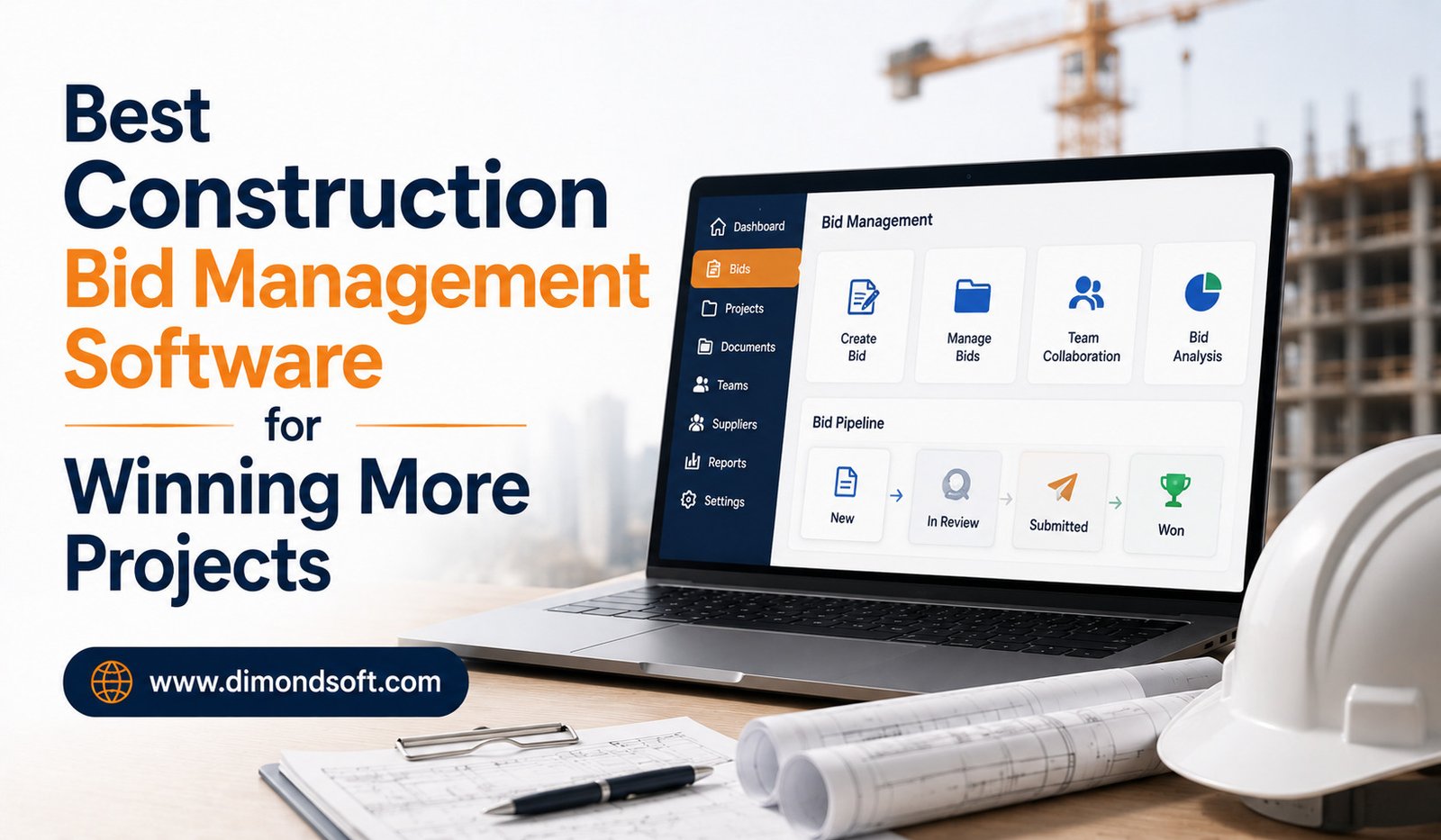
Winning construction projects requires more than offering the lowest price. Contractors must find the right opportunities, understand project requirements, collect subcontractor quotes, compare costs, organize documents, and submit accurate proposals before strict deadlines. Managing these activities through emails, spreadsheets, and separate files can make the bidding process complicated and increase the risk of mistakes.
Construction bid management software brings these activities into one digital workflow. It helps contractors track opportunities, manage bid invitations, communicate with subcontractors, organize documents, compare proposals, and monitor deadlines. With better organization and access to information, estimating teams can spend more time evaluating projects and less time handling administrative work.
The best solution depends on the company’s size, project volume, type of construction, budget, and existing software. Some platforms concentrate on subcontractor bidding, while others combine bid management with estimating, takeoffs, project discovery, and preconstruction.
What Is Construction Bid Management Software?
Construction bid management software is a digital solution that helps contractors manage the bidding process from receiving or finding a project opportunity through proposal submission.
In a traditional process, an estimator might receive a bid invitation through email, download drawings from another website, store pricing in spreadsheets, communicate with subcontractors by phone, and track deadlines manually. This can become difficult when multiple projects are being estimated at the same time.
Bid management software provides a central location for project information. Estimators can review active bids, organize documents, assign tasks, monitor subcontractor responses, and track important dates from one system.
Some platforms also provide project leads, allowing contractors to discover potential construction opportunities before deciding which ones are worth pursuing.
Why Contractors Need Bid Management Software
Construction companies often manage many opportunities simultaneously. Without an organized system, estimators may spend too much time searching for documents, checking emails, following up with subcontractors, and updating spreadsheets.
A centralized platform gives managers a clear view of the bidding pipeline. They can see which bids are new, which deadlines are approaching, and which estimates still need information.
The software can also improve communication. Drawings, specifications, addenda, questions, and subcontractor proposals can remain connected to the appropriate project.
Another important benefit is better decision-making. When subcontractor quotes are organized and compared consistently, estimators can identify pricing differences and scope gaps before preparing the final bid.
Best Construction Bid Management Software
1. Procore
Procore is a comprehensive construction-management platform that includes bid management and preconstruction capabilities. Contractors can use it to organize bid invitations, manage subcontractor information, compare proposals, and track bidding activities.
Its biggest advantage is integration. Companies already using Procore for project management can connect preconstruction information with later construction workflows.
Best for: Medium-sized and large contractors looking for an integrated construction platform.
2. Autodesk BuildingConnected
Autodesk BuildingConnected focuses on bid management and communication between general contractors and subcontractors. It helps teams organize bid invitations, distribute bid packages, track responses, and manage trade-specific bidding.
Its connection with the Autodesk construction ecosystem can be useful for companies already using Autodesk tools.
Best for: General contractors managing multiple subcontractors and trade packages.
3. ConstructConnect
ConstructConnect combines project information with bidding and preconstruction tools. Contractors can use the platform to discover potential projects and support estimating and bid preparation.
This broader approach makes it useful for companies that want to improve both project discovery and bidding workflows.
Best for: Contractors seeking project leads and preconstruction capabilities.
4. SmartBid
SmartBid is focused on subcontractor management and bid solicitation. It helps general contractors organize trade partners, send invitations, monitor responses, and manage bid-related communication.
The platform can be particularly useful for companies that handle numerous trade packages.
Best for: General contractors that frequently solicit subcontractor bids.
5. FollowUp CRM
FollowUp CRM combines construction opportunity management with sales and follow-up activities. Contractors can track potential projects, monitor communication, and maintain visibility into their business-development pipeline.
Best for: Contractors wanting bid tracking and sales management in one system.
Important Features to Consider
The best platform should make the bidding process easier rather than create additional administrative work. Contractors should focus on features that directly support their workflow.
Key features include:
- Bid tracking: Monitor project status, deadlines, responsibilities, and submission progress.
- Subcontractor management: Organize trade partners, invitations, responses, and communications.
- Bid comparison: Compare proposals and identify pricing differences or scope gaps.
- Document management: Keep drawings, specifications, addenda, and related files organized.
- Reporting: Review bidding activity, win rates, response rates, and historical results.
Mobile access is also valuable because estimators may need project information while working away from the office. Integration with estimating, takeoff, accounting, and project-management systems can further reduce duplicate data entry.
How Bid Software Improves Estimating Accuracy
Accurate estimating is essential to construction profitability. A bid that is too expensive may lose the project, while an estimate that is too low can cause financial problems after the contract is awarded.
Bid management software can improve the estimating process by keeping project information, subcontractor proposals, and communications together. Estimators can spend less time searching for information and more time reviewing scope and pricing.
Bid leveling is especially useful. Two subcontractors may quote different prices because their scopes are different. One may include specific work that another has excluded. Comparing only the final price could therefore lead to an incorrect decision.
A structured comparison process helps estimators identify these differences before using subcontractor pricing in the final proposal.
Managing Deadlines More Effectively
Construction bids often have strict submission deadlines. Missing an important date can eliminate an otherwise valuable opportunity.
Digital calendars, reminders, notifications, and dashboards help estimating teams keep track of deadlines. Instead of depending on individual calendars or memory, companies can maintain a shared schedule.
This is especially useful when an estimator is handling multiple projects. Managers can identify unfinished tasks and address problems before the final submission date.
Better deadline management also gives teams more time to review proposals and correct errors before submitting them.
Improving Subcontractor Communication
Subcontractor participation is essential for many general contractors. Reliable trade coverage provides better pricing information and reduces uncertainty during estimating.
Bid management software makes it easier to send invitations, monitor responses, and follow up with subcontractors who have not submitted proposals.
An organized subcontractor database is also valuable. Contractors can maintain contact information and track which companies respond consistently or specialize in particular trades and locations.
Over time, this information can help estimators develop stronger subcontractor networks and improve bid coverage.
Using Historical Data for Better Bidding
Digital bid management creates a record of previous bidding activity. Instead of losing information after a project is won or lost, companies can retain data about opportunities, estimates, subcontractor participation, and outcomes.
This information can reveal useful patterns. Contractors may discover which project types produce better results, which customers are worth pursuing, or where their bidding strategy needs improvement.
Historical information can also help management evaluate win rates and determine whether the company is spending too much time pursuing opportunities with limited potential.
How to Choose the Right Software
The right software should match the company’s actual bidding process. A small specialty contractor may need basic bid tracking, reminders, and document organization, while a large general contractor may require advanced subcontractor management, bid leveling, project discovery, estimating integration, and reporting.
Before choosing a platform, consider:
- Bidding volume: Make sure the system supports your number of projects and users.
- Workflow requirements: Decide whether you need basic bid management or a complete preconstruction platform.
- Integration: Check compatibility with existing estimating, accounting, takeoff, and project-management tools.
- Ease of use and cost: Ensure employees can adopt the software and that the investment provides meaningful value.
Ease of use should not be overlooked. A complicated system may provide many features but deliver limited benefits if employees continue relying on spreadsheets and email.
Best Practices for Winning More Projects
Software can improve organization, but it cannot replace a strong bidding strategy. Contractors should first qualify opportunities before investing significant estimating time. Consider the project size, location, customer history, schedule, scope, competition, and expected profitability.
Maintain an accurate subcontractor database and regularly update contact information. Tracking response rates and performance can help estimators identify dependable trade partners.
After each bid, record the result and review what happened. Successful bids can reveal effective strategies, while unsuccessful proposals can provide lessons about pricing, competition, or project selection.
Contractors should also avoid pursuing every available project. Focusing on opportunities that match their capabilities can help estimating teams dedicate more time to bids with realistic potential.
The Future of Construction Bid Management
Artificial intelligence is beginning to change construction bidding and preconstruction. AI-powered tools can assist with analyzing project documents, extracting information, supporting takeoffs, comparing proposals, and identifying possible scope issues.
As technology develops, project discovery, estimating, subcontractor communication, bid management, and proposal preparation are likely to become increasingly connected.
AI may also help contractors analyze historical bidding information and identify patterns that are difficult to recognize manually. However, experienced professionals will remain essential because construction pricing depends on labor availability, material costs, market conditions, project complexity, risk, and customer relationships.
The future of bidding will therefore likely combine automated technology with professional judgment.
FAQs
What is the best construction bid management software?
There is no single best option for every contractor. Procore is suitable for integrated construction management, BuildingConnected is strong for subcontractor bidding, ConstructConnect combines project discovery with preconstruction, and SmartBid focuses on bid solicitation.
Can bid management software help increase win rates?
It can improve organization, deadline management, subcontractor coverage, bid comparison, and historical analysis. However, winning projects also depends on pricing, relationships, qualifications, project selection, and proposal quality.
Is bid management software useful for small contractors?
Yes. Small contractors can use it to organize opportunities, documents, deadlines, and follow-ups. They should choose a platform that provides the features they need without unnecessary complexity.
Does bid management software replace estimating software?
Not always. Some platforms include estimating and takeoff tools, while others focus mainly on bid coordination. Contractors should determine which estimating functions they need before selecting a platform.
Conclusion
Construction bid management software can transform a fragmented bidding process into a more organized and efficient workflow. By centralizing opportunities, subcontractor communication, documents, deadlines, proposals, and historical information, these platforms give estimating teams greater visibility and control.
Procore, Autodesk BuildingConnected, ConstructConnect, SmartBid, and FollowUp CRM serve different construction bidding needs. The right choice depends on company size, project volume, workflow, budget, and existing technology.
Software cannot guarantee a project win, but it can help contractors reduce administrative work and make better decisions. When combined with accurate estimating, strong subcontractor relationships, careful project selection, and effective proposals, the right bid management software can help construction companies compete more effectively and pursue more profitable projects.