
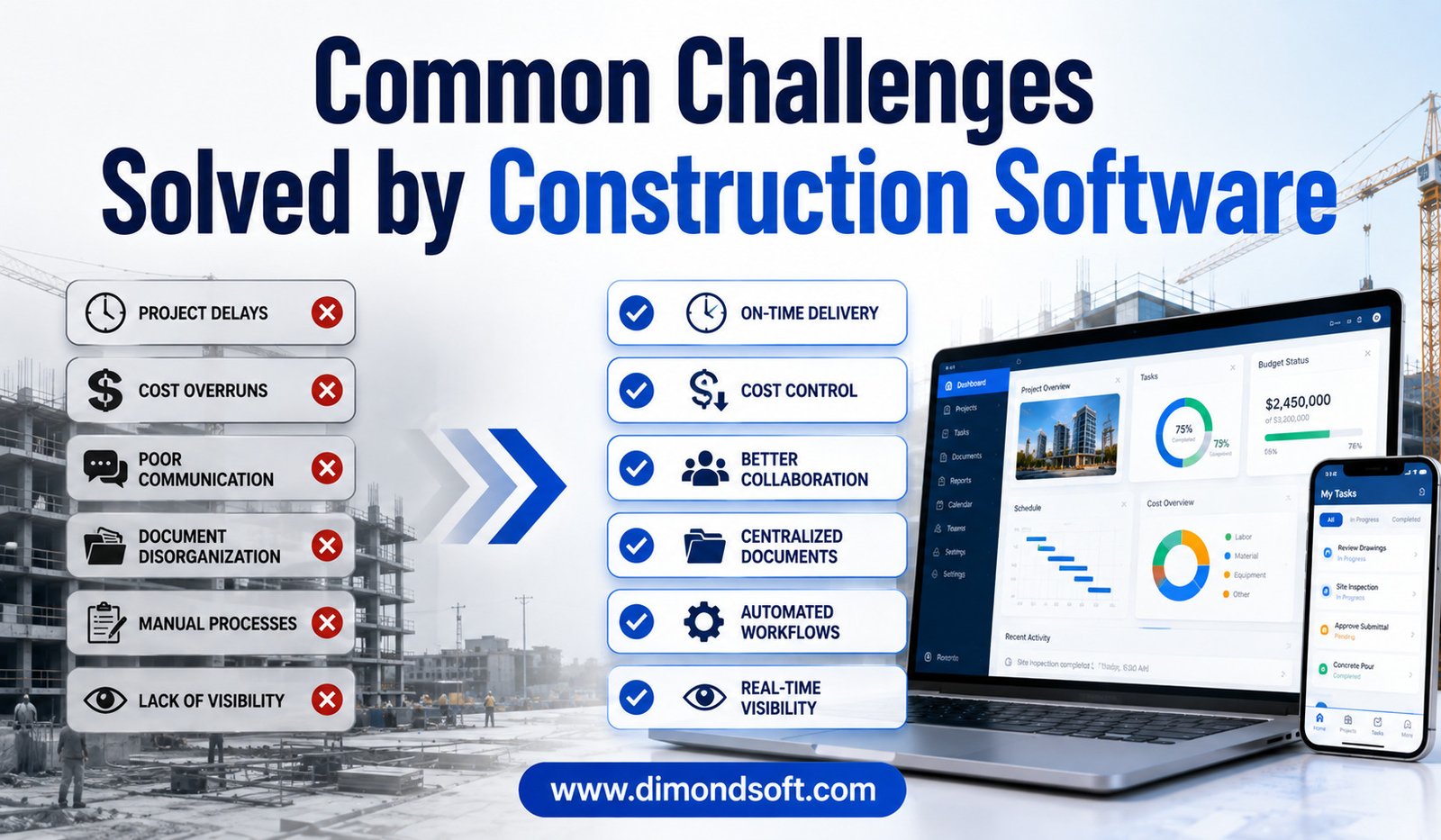
Construction projects involve many moving parts, from estimating and budgeting to scheduling, procurement, field operations, documentation, and client communication. When these activities are managed through disconnected spreadsheets, paper records, phone calls, and email chains, even experienced teams can struggle to maintain control.
Delays, cost overruns, communication gaps, missing documents, inaccurate estimates, and inefficient workflows can quickly affect project profitability. Construction software has emerged as a practical way to address many of these challenges by connecting project information and automating repetitive processes.
Modern construction software is not designed to replace contractors, project managers, estimators, or field professionals. Instead, it provides digital tools that help teams organize information, reduce manual work, monitor performance, and make decisions more efficiently.
For construction companies looking to improve productivity and project control, understanding the problems that software can solve is an important first step.
Poor Project Organization
One of the most common challenges in construction is keeping project information organized. A single project can generate hundreds or thousands of documents, including contracts, drawings, specifications, schedules, invoices, change orders, inspection records, and daily reports.
When these files are stored across different computers, email accounts, physical folders, and cloud storage locations, finding the right information can become time-consuming.
Construction software provides centralized project management and document storage. Authorized users can access important information from one platform, reducing the need to search through multiple locations.
A well-organized digital environment also makes it easier to determine which information is current. This can reduce confusion and help teams avoid making decisions based on outdated documents.
Communication Gaps Between Teams
Construction projects require continuous communication between contractors, subcontractors, architects, engineers, suppliers, clients, and field workers. Communication problems can create delays even when the physical work is progressing well.
Important information can become buried in long email threads or missed when messages are sent through different channels.
Construction software creates a more structured communication environment. Project updates, task assignments, RFIs, documents, and notifications can be connected to the appropriate project.
This allows team members to find relevant information more easily and reduces the number of repetitive calls and messages required to clarify project details.
Better communication can also create a clearer record of decisions and responsibilities.
Manual Scheduling Problems
Construction schedules are constantly changing. A late material delivery, weather event, design revision, or labor shortage can affect multiple activities.
Managing these changes manually through spreadsheets can be difficult. Project managers may have to update several sections of a schedule and notify multiple teams separately.
Construction scheduling software simplifies this process by allowing teams to create connected timelines, establish task dependencies, assign responsibilities, and monitor progress.
When one activity changes, managers can more easily understand which other activities could be affected.
Automated reminders and notifications can also help teams stay aware of upcoming deadlines and schedule changes.
Cost Overruns and Limited Financial Visibility
Maintaining control over project costs is one of the biggest challenges for contractors. Costs can change throughout construction because of material price increases, labor issues, unexpected site conditions, change orders, and project delays.
Traditional financial tracking may require project managers to compare multiple spreadsheets and accounting records manually.
Construction software can provide better visibility by connecting budgets, expenses, commitments, invoices, purchase orders, and other financial information.
Managers can compare planned costs with actual spending and identify potential problems earlier. Instead of discovering an overrun after a project is nearly complete, teams can investigate unusual spending while there is still an opportunity to take corrective action.
Inefficient Estimating
Accurate estimating is critical because an incorrect bid can affect profitability long before construction begins.
Estimators often need to review plans, calculate quantities, evaluate labor requirements, research material costs, and account for subcontractor pricing. Performing these tasks manually can take considerable time and increase the possibility of calculation errors.
Estimating software can streamline quantity takeoffs, cost calculations, templates, historical comparisons, and bid preparation.
Some modern platforms also include AI-powered capabilities that can analyze project information and assist with identifying quantities or potential cost patterns.
However, software should support professional judgment rather than replace it. Experienced estimators still need to review assumptions and account for project-specific factors.
Difficult Document Management
Document control can become particularly challenging on large projects. Multiple versions of drawings and specifications may circulate between different parties, making it difficult to determine which file should be used.
Construction document management software can provide centralized storage, search capabilities, permissions, and version tracking.
Instead of asking colleagues for the latest file, users can access the appropriate document through the project platform.
This is especially valuable when teams need to review project history, respond to disputes, complete audits, or prepare closeout documentation.
Slow RFI and Approval Processes
Requests for information and approval processes can cause significant delays when they are managed manually.
An RFI may require input from several people, and a delayed response can prevent field teams from moving forward with a task.
Construction software can organize RFIs by status, responsibility, deadline, and response. Users can see which requests are still open and identify items that need immediate attention.
Digital approval workflows can provide similar benefits. Instead of relying on paper documents or long email chains, users can submit, review, approve, and track information within a structured system.
This helps reduce waiting time and creates a clearer record of project decisions.
Difficulty Tracking Field Progress
Office teams need accurate information from the jobsite to understand whether a project is progressing as planned. However, field updates can be delayed when workers rely on paper forms or end-of-day reporting.
Mobile construction applications allow field teams to submit updates directly from the jobsite. Supervisors can record completed activities, upload photographs, report issues, and complete digital forms.
Office staff can then access the information without waiting for paperwork to be delivered.
Faster field reporting gives project managers better visibility and helps them respond to issues sooner.
Labor and Resource Management
Construction productivity depends heavily on having the right people, materials, and equipment available at the right time.
Poor resource coordination can result in workers waiting for materials, equipment sitting unused, or crews being scheduled before the site is ready.
Construction software can help managers coordinate labor, equipment, and materials with project activities. Digital schedules and resource tracking provide a clearer view of upcoming requirements.
Time-tracking features can also help contractors record labor hours against specific projects or tasks. This information can support payroll, productivity analysis, and project cost monitoring.
Managing Change Orders
Changes are a normal part of construction, but poorly managed changes can create financial and scheduling problems.
A change order may affect the scope of work, cost, schedule, materials, and subcontractor responsibilities. If the information is not properly documented, disagreements can occur later.
Construction management software can centralize change order requests, supporting documents, approvals, cost impacts, and schedule effects.
Project managers can monitor the status of each change and maintain a digital record throughout the approval process.
This improves transparency and reduces the risk of changes being performed without proper documentation.
Repetitive Administrative Work
Construction professionals often spend a large amount of time on repetitive administrative activities. Entering the same information into multiple spreadsheets, preparing routine reports, sending reminders, and organizing documents can consume hours every week.
Automation is one of the major advantages of construction software.
Digital platforms can automate notifications, recurring reports, data entry workflows, task assignments, and other routine activities. This allows employees to spend more time on work that requires professional judgment.
Even small reductions in administrative effort can produce significant savings when applied across multiple projects.
Lack of Real-Time Project Visibility
A major challenge for construction managers is knowing what is happening across a project at any given time.
When information is collected manually and updated periodically, management may only see problems after they have already affected the schedule or budget.
Cloud-based construction software can provide more current project information. Dashboards can display schedule progress, outstanding tasks, financial information, field updates, and other performance indicators.
This visibility helps managers identify problems sooner and prioritize their response.
Weak Collaboration With Subcontractors
Subcontractors play a central role in construction, and coordination between different trades is essential.
If subcontractors receive outdated schedules or incomplete information, work may be performed out of sequence or crews may arrive before the site is ready.
Construction software can provide subcontractors with controlled access to schedules, drawings, tasks, RFIs, and other relevant information.
A shared digital workflow can improve accountability while reducing communication gaps between the general contractor and trade partners.
Difficulty Maintaining Project Records
Maintaining accurate project records is essential for construction companies. Daily reports, photographs, inspections, communications, approvals, and other documentation may become important during disputes or claims.
Paper records are difficult to search and can be lost or damaged.
Digital construction platforms can store project records in an organized environment. Information can be associated with specific activities, dates, documents, or project areas.
This makes it easier to retrieve information when needed and supports better project documentation throughout the construction lifecycle.
How to Choose Software That Solves Real Problems
Construction companies should not adopt software simply because it has a long list of features. The right platform should address the specific problems affecting the business.
Before selecting a solution, contractors should identify where the most time and money are being lost. If estimating takes too long, estimating capabilities may be the priority. If communication is the main problem, collaboration and document management features may provide greater value.
Integration is also important. Software that connects with accounting, estimating, scheduling, or other existing systems can reduce duplicate data entry.
Ease of use should be considered as well. A platform will only create value if employees and field teams actually use it consistently.
Training, customer support, data security, mobile accessibility, and scalability should also be evaluated before making a decision.
The Future of Construction Software
Construction software is becoming increasingly intelligent. Artificial intelligence, predictive analytics, cloud computing, mobile technology, and connected devices are expanding what digital construction platforms can do.
Future systems are likely to provide stronger forecasting, automated document analysis, improved risk identification, and more connected workflows between field operations and office management.
However, technology will remain most effective when combined with construction expertise. Software can organize information and identify patterns, but experienced professionals still need to interpret results and make decisions based on real project conditions.
Conclusion
Construction software can solve many of the operational challenges that contractors face every day. From poor organization and communication gaps to cost control, scheduling, document management, field reporting, and change orders, digital tools can make construction workflows more connected and efficient.
The greatest benefit comes from selecting software based on actual business needs rather than simply choosing the platform with the most features. When the right tools are combined with clear processes and proper employee training, construction companies can reduce administrative work, improve project visibility, and respond to problems faster.
As construction projects continue to become more complex, digital software will play an increasingly important role in helping contractors stay organized, control costs, improve collaboration, and deliver projects more efficiently.