AI agents are becoming increasingly capable of handling complex tasks such as research, coding, data analysis, customer support, content creation, and business automation. But as organizations move from using one AI assistant to deploying multiple specialized agents, a new challenge becomes increasingly important: how can different AI agents share the same project knowledge?
A coding agent may know what features have already been implemented. A research agent may have collected important information. A planning agent may understand the project’s goals. If these agents operate independently, valuable context can become fragmented.
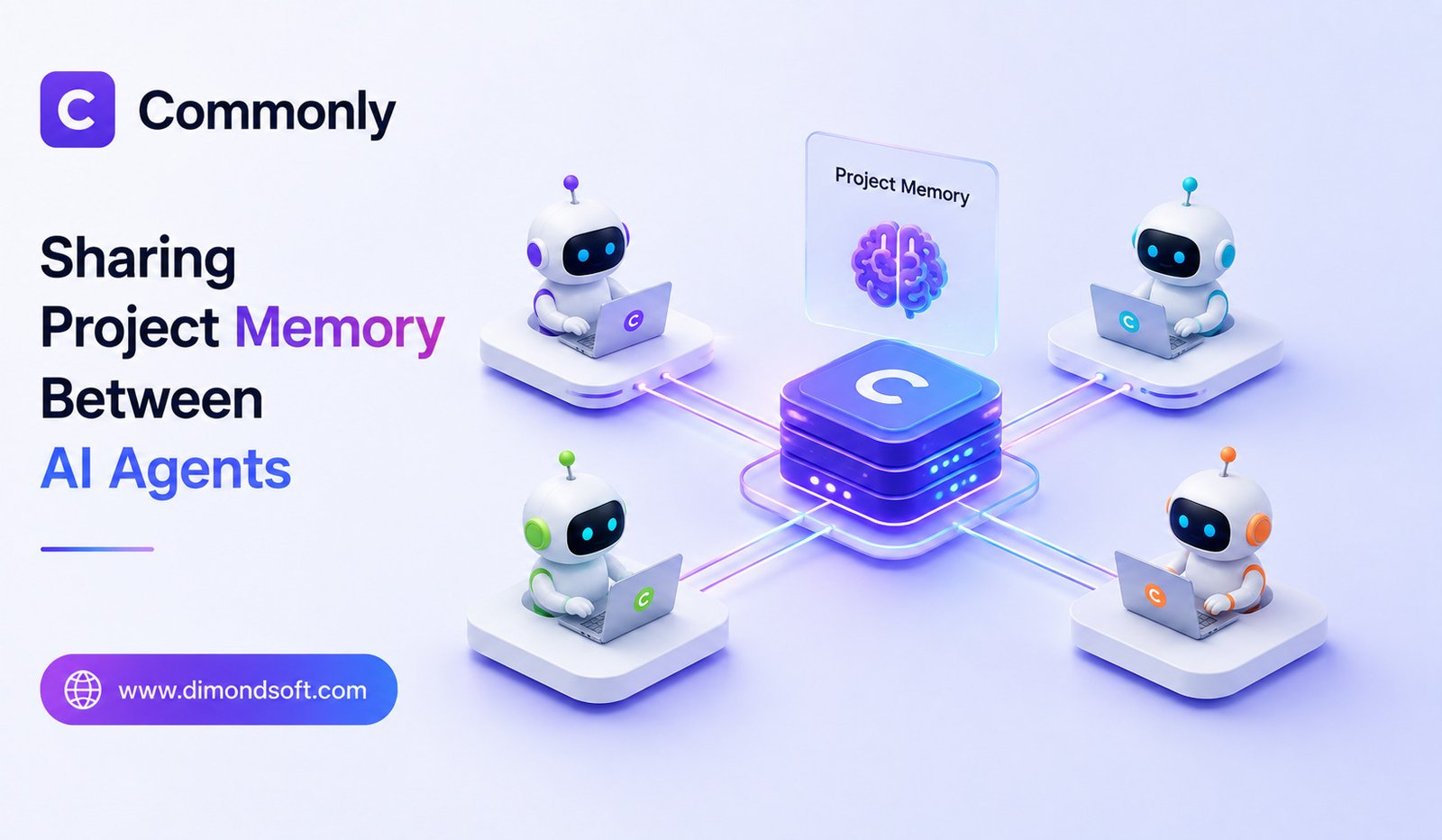
Commonly represents the emerging idea of sharing project memory between AI agents. Instead of keeping every agent isolated, a shared memory layer can help different AI workers access relevant information about the same project.
This approach could make multi-agent systems more coordinated, consistent, and useful.
What Is Commonly?
Commonly can be understood in the context of shared project memory for AI agents.
Traditional AI assistants often maintain context within individual conversations.
If one agent works on a task and another agent starts later, the second system may not know what happened previously.
Shared memory attempts to solve this problem.
A central memory system can store important information about a project and make relevant pieces available to different agents.
For example, an AI development team could have separate agents for planning, coding, testing, and documentation.
All of them could access a shared understanding of the project’s goals, decisions, architecture, and progress.
Why AI Agents Need Shared Memory
A single AI agent can often manage a relatively simple task.
Complex projects are different.
They involve multiple responsibilities and continuous changes.
Imagine a software project where:
Agent A: Defines product requirements.
Agent B: Writes code.
Agent C: Tests the application.
Agent D: Maintains documentation.
If these agents don’t share information, each may work from a different understanding of the project.
The coding agent might implement a feature differently from the product requirements.
The documentation agent might describe an older version.
The testing agent might not know about a recent architectural change.
Shared memory can help keep these agents aligned.
What Counts as Project Memory?
Project memory can contain many different types of information.
It might include:
- Product requirements
- Technical decisions
- User preferences
- Previous tasks
- Project goals
- Documentation
- Important discoveries
- Known problems
- Completed work
- Pending tasks
- Business rules
Not every piece of information needs to be stored forever.
A useful memory system should distinguish between temporary context and information that remains relevant over time.
Shared Memory vs Conversation History
Conversation history and project memory are not the same thing.
Conversation history contains the messages exchanged during a particular interaction.
Project memory is more structured around information that remains useful beyond one conversation.
For example, a developer might tell an AI:
“We decided to use PostgreSQL for the main database.”
That decision may be relevant weeks later.
Instead of requiring every new agent to read an old conversation, the decision can be stored as project knowledge.
A future coding agent can then access it when working on database-related tasks.
Creating a Shared Source of Truth
One of the biggest benefits of shared memory is creating a common source of truth.
Without shared memory, different agents may develop conflicting assumptions.
One agent may believe a feature is complete while another thinks it is still being developed.
A centralized project memory can record important decisions and current status.
This gives agents a consistent foundation.
However, the memory itself must be maintained carefully.
Incorrect information stored in a shared system can spread errors across multiple agents.
How Shared Agent Memory Can Work
A shared memory architecture generally needs several components.
First, information needs to be captured.
This could happen when an agent completes a task, makes an important discovery, or records a decision.
Next, the information needs to be stored in a searchable format.
When another agent starts a task, the system can retrieve relevant memories.
The retrieved information becomes context for the agent.
The general process can look like:
Agent works → Important information is recorded → Memory is stored → Another agent starts → Relevant memory is retrieved → Agent continues the work
This creates continuity between otherwise separate AI processes.
Memory Retrieval Is Critical
Simply storing thousands of pieces of information isn’t enough.
An AI agent needs to retrieve the right information at the right time.
A project may contain hundreds or thousands of documents and decisions.
Providing all of them to an agent would be inefficient and could overwhelm its context.
Memory systems therefore need retrieval mechanisms.
When an agent receives a task, the system can search for information related to that task and provide only the most relevant context.
This is closely related to retrieval-augmented generation, or RAG.
Semantic Search for AI Memory
Traditional keyword search looks for exact words.
AI memory systems can also use semantic search.
This allows the system to find information based on meaning rather than only matching specific terms.
For example, an agent asking:
“How do we authenticate users?”
might retrieve a project decision discussing login architecture even if the document never uses the exact phrase “authenticate users.”
Semantic retrieval can make shared memory more useful for AI agents.
Memory Between Coding Agents
Software development is an excellent example.
A project could use multiple coding agents with different responsibilities.
One agent may implement features.
Another may review code.
Another may investigate bugs.
Another may maintain tests.
Shared memory can help them understand previous decisions.
For example, if the team decided not to introduce a particular library because of compatibility issues, that decision can be stored.
A future agent can avoid repeating the same mistake.
Sharing Memory Between Research Agents
Research projects can also benefit.
One AI agent might discover an important source.
Another agent could later build on that information.
Without shared memory, the second agent may repeat the same research.
With a shared knowledge system, discoveries can accumulate.
Over time, the AI team develops a collective understanding of the project.
This is especially valuable for long-running research projects.
AI Agents for Business Operations
Businesses may use different agents for different departments.
A sales agent could collect customer information.
A support agent could handle service requests.
A marketing agent could analyze campaign performance.
An operations agent could manage internal workflows.
If these agents share appropriate business knowledge, they can potentially coordinate more effectively.
For example, a customer-support agent could access relevant information previously collected by another authorized agent.
This reduces duplicate work.
Avoiding Repeated Work
One of the simplest benefits of shared memory is preventing agents from doing the same work repeatedly.
Suppose a research agent spends an hour analyzing competitors.
If another agent has no access to those findings, it may perform the same analysis.
A shared memory system can store the research and make it available later.
This creates cumulative intelligence.
Every useful discovery can become part of the project’s knowledge rather than disappearing when an individual AI session ends.
Persistent Project Knowledge
Projects often last much longer than individual AI conversations.
A startup might work on a product for months.
A software application might be maintained for years.
A research project could evolve continuously.
Persistent memory allows AI agents to participate in these longer timelines.
Instead of resetting their knowledge with every new session, agents can build on previous work.
This could become increasingly important as AI systems move from short interactions toward long-running autonomous workflows.
The Challenge of Outdated Memory
Memory can also become a problem.
Projects change.
A technical decision made six months ago may no longer apply.
A product requirement may be replaced.
A customer preference may change.
If agents retrieve outdated information, they may make incorrect decisions.
A good memory system therefore needs ways to update, archive, prioritize, or invalidate old information.
Recency and authority can be important factors when deciding which memory should influence an agent.
Avoiding Conflicting Information
Multiple agents may also create contradictory memories.
One agent could record that a feature is complete.
Another might later discover that it is incomplete.
The memory system needs a way to handle these conflicts.
Possible approaches include recording timestamps, sources, confidence levels, and project status.
Human review can also be useful for important decisions.
Shared memory should not become an uncontrolled collection of statements.
Memory Permissions and Privacy
Not every agent should necessarily have access to every piece of project memory.
A financial agent may need access to financial information.
A marketing agent may not.
A customer-support agent may need customer details but not internal engineering documentation.
Permission controls are therefore essential.
Shared memory should be shared appropriately, not universally.
Organizations need to define which agents can access which information.
Security Risks
Centralized AI memory can become an attractive target for attackers.
If sensitive project information is stored in one system, unauthorized access could expose a large amount of data.
Businesses should consider encryption, authentication, access controls, logging, and secure storage.
AI agents should also be prevented from automatically accessing information beyond their responsibilities.
The more capable the agent network becomes, the more important these controls are.
Human Oversight
AI agents can record information automatically, but important memories may still require human validation.
For example, an agent could propose a technical decision and store it as a draft.
A developer could then approve it as an official project decision.
This creates a distinction between:
AI-generated context
and
verified project knowledge
Such a distinction can improve reliability.
Benefits for Development Teams
Shared memory can make multi-agent development more coordinated.
Potential benefits include:
- Less repeated research
- Better continuity
- More consistent decisions
- Faster handoffs
- Reduced context-setting
- Better documentation
- More efficient collaboration between agents
The greatest value appears when multiple AI workers are contributing to the same long-running project.
Challenges for AI Memory Systems
Building reliable shared memory isn’t easy.
The system must decide what information to save, how long to retain it, how to retrieve it, and when to remove outdated information.
Poor retrieval can result in irrelevant context.
Poor memory management can cause agents to rely on incorrect information.
There are also cost considerations because storing and processing large amounts of project information can require additional infrastructure.
Therefore, shared memory needs thoughtful design.
The Future of Multi-Agent Collaboration
As AI agents become more specialized, collaboration between them will become increasingly important.
Instead of one large AI system performing every task, businesses may use networks of specialized agents.
One agent could plan.
Another could research.
Another could build.
Another could test.
Another could monitor results.
A shared memory layer can serve as the connective tissue between these systems.
It gives the agents a common understanding while allowing them to specialize.
Why Commonly Represents an Important AI Trend
The concept behind Commonly reflects an important shift in AI development.
Early AI applications focused heavily on individual interactions.
The next generation is increasingly concerned with continuity and collaboration.
An AI agent that forgets everything after completing a task has limited long-term usefulness.
A group of agents that can learn from each other’s work and build on accumulated project knowledge could be much more powerful.
Shared memory is therefore becoming an important part of multi-agent architecture.
Final Thoughts
Commonly represents the growing idea of sharing project memory between AI agents.
As businesses and developers deploy multiple AI agents, keeping those systems aligned becomes increasingly important.
Shared memory can help agents access previous decisions, research, requirements, discoveries, and project history without requiring every new agent to start from scratch.
The technology also introduces challenges involving outdated information, conflicting memories, privacy, security, and access control.
The most effective systems will need to do more than simply store information. They will need to understand what matters, who should see it, when it remains valid, and when it should be forgotten.
As AI moves toward teams of specialized agents working together, shared project memory could become one of the foundations that makes those digital teams genuinely collaborative.