
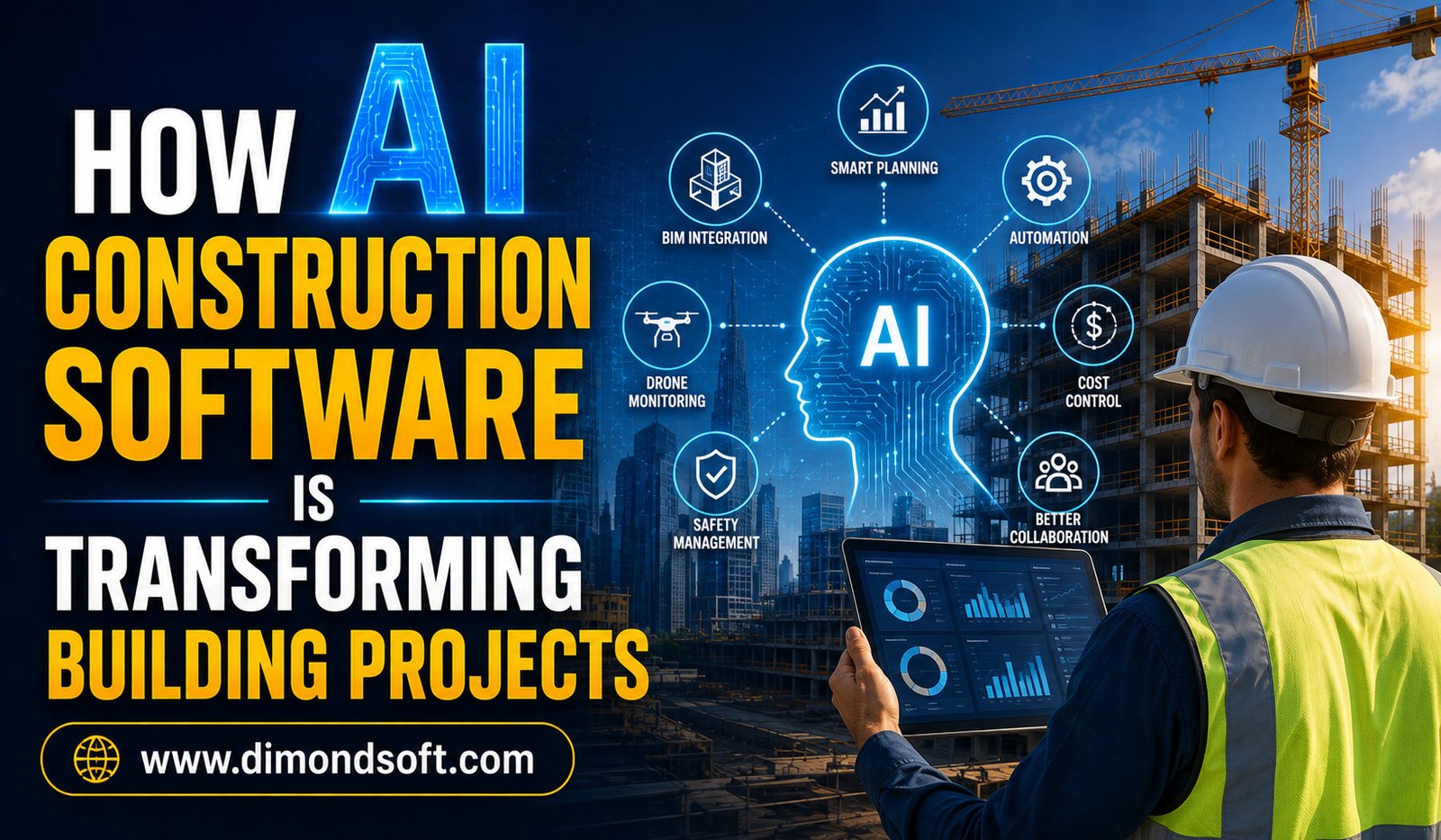
The construction industry has always depended on careful planning, skilled workers, accurate measurements, and effective project management. However, modern building projects are becoming more complex, deadlines are becoming tighter, and construction companies are under increasing pressure to control costs while maintaining quality. These challenges are encouraging the industry to adopt advanced digital technologies, with artificial intelligence emerging as one of the most influential.
AI construction software is changing how contractors, architects, engineers, project managers, and developers approach building projects. From estimating costs and scheduling activities to monitoring job sites and identifying potential risks, AI-powered solutions can process large amounts of information and help construction teams make faster, more informed decisions.
Rather than replacing construction professionals, artificial intelligence is becoming a powerful support system that helps them reduce repetitive work, recognize potential problems earlier, and manage projects more efficiently.
What Is AI Construction Software?
AI construction software refers to digital platforms and applications that use artificial intelligence, machine learning, computer vision, predictive analytics, automation, or related technologies to improve construction processes.
Traditional construction software can store project information, manage schedules, track expenses, and organize documents. AI-powered platforms take these capabilities further by analyzing information and generating useful predictions or recommendations.
For example, an AI system may analyze previous project data to estimate the likely cost of a new development. Another solution may examine site images to identify safety concerns, while an intelligent scheduling system can detect possible delays and recommend adjustments.
The technology can therefore support construction projects from the early planning stage through completion and ongoing facility management.
AI Is Improving Construction Cost Estimation
Accurate cost estimation is one of the most important parts of any construction project. A small error in an estimate can create major financial problems once work begins.
AI construction software can analyze historical project information, material prices, labor requirements, location-specific factors, and other variables to produce more data-driven estimates. Instead of relying entirely on manual calculations and previous experience, estimators can use AI-generated insights to identify potential cost differences.
AI can also help teams compare different project scenarios. For instance, changing a material specification or construction method may affect the overall budget. Software can process these changes quickly and show their potential financial impact.
This does not eliminate the need for professional estimators. Instead, it gives them additional information that can improve the accuracy and speed of their decisions.
Smarter Project Scheduling
Construction schedules can change frequently because of weather, material shortages, labor availability, equipment problems, design changes, or unexpected site conditions.
AI-powered scheduling tools can analyze relationships between different project activities and identify tasks that could create delays. By examining current progress alongside historical information, these systems can highlight potential schedule problems before they become serious.
For example, if a particular material is likely to arrive late, an AI system may identify which upcoming activities could be affected. Project managers can then adjust sequencing or allocate resources differently.
This creates a more flexible approach to project scheduling. Instead of simply reacting to delays after they occur, teams can use predictive information to prepare for them.
Better Risk Management
Every construction project involves risks, but identifying those risks early can make a significant difference.
AI can examine project data to identify patterns associated with cost overruns, schedule delays, equipment failures, or other problems. Predictive analytics can help managers understand where attention may be needed most.
Some AI systems can also evaluate information from previous projects to identify recurring risk factors. If similar conditions previously resulted in delays, the software can flag those circumstances during a new project.
Risk management therefore becomes more proactive. Construction professionals can investigate potential issues earlier and develop contingency plans instead of waiting until a problem disrupts the project.
Enhancing Construction Site Safety
Safety remains a major priority on construction sites. AI and computer vision are creating new ways to monitor potentially hazardous conditions.
AI-enabled cameras can analyze site activity and detect situations that may violate established safety requirements. Depending on the system, it may identify missing protective equipment, unauthorized access to restricted areas, unsafe proximity to machinery, or other visible risks.
These technologies can provide alerts that allow supervisors to investigate problems quickly. They can also create useful safety records that help organizations identify recurring issues.
However, AI-based monitoring should complement rather than replace human safety professionals. Construction environments are complicated, and experienced supervisors remain essential for understanding context and responding appropriately.
Automating Repetitive Administrative Tasks
Construction professionals often spend substantial amounts of time handling paperwork, entering information, reviewing documents, and preparing reports.
AI can automate many repetitive administrative activities. Intelligent systems can organize project documents, extract relevant information from files, summarize updates, and assist with routine reporting.
For project managers, this can reduce the amount of time spent searching through documents or manually compiling information from different sources.
Automation also helps improve consistency. When routine processes are handled through standardized digital workflows, there may be fewer opportunities for manual data-entry mistakes.
The time saved can be redirected toward higher-value activities such as coordinating teams, solving project issues, and communicating with clients.
Improving Building Design and Planning
AI is also influencing the design stage of construction. Architects and engineers can use intelligent tools to explore multiple design possibilities based on project requirements.
An AI system can evaluate factors such as available space, material use, energy performance, construction costs, and functional requirements. It can then help professionals compare different options.
This approach can support faster design iteration. Instead of manually testing every possibility, teams can use computational tools to explore alternatives and focus their expertise on the most promising solutions.
AI can also work alongside Building Information Modeling (BIM), creating opportunities for more connected design and construction workflows. When project information is digitally coordinated, teams can identify certain conflicts before construction begins.
AI and Predictive Equipment Maintenance
Construction equipment is essential to keeping projects moving. When important machinery breaks down unexpectedly, work can stop and costs can increase.
AI-powered maintenance systems can analyze equipment data to identify signs of potential problems. Sensors may collect information about operating hours, temperature, vibration, fuel consumption, or other performance indicators.
Instead of servicing equipment only according to a fixed timetable, companies can use predictive maintenance approaches to determine when attention may actually be required.
Early identification of equipment problems can reduce unexpected downtime and help companies plan maintenance activities around the construction schedule.
Improving Material Management
Material waste and supply problems can have a direct effect on construction costs.
AI can help companies forecast material requirements by analyzing project plans, schedules, previous consumption patterns, and current inventory information. This can support better purchasing and inventory decisions.
For example, if software identifies that a particular material is being consumed faster than expected, managers can investigate the situation before the shortage affects construction activities.
AI can also contribute to waste reduction by helping teams understand where excess materials are being generated. Better forecasting and resource planning can support more efficient use of materials.
Real-Time Construction Monitoring
Keeping track of construction progress across a large project can be challenging. AI-powered monitoring systems can combine information from cameras, drones, sensors, schedules, and other digital sources.
Computer vision technology can compare actual site conditions with project plans and help identify differences between expected and observed progress.
Drones equipped with imaging technology can also capture aerial information from difficult-to-access areas. AI can analyze these images and organize relevant findings for project teams.
This provides managers with greater visibility into what is happening on site without requiring them to physically inspect every area at every moment.
Improving Communication and Collaboration
Construction projects involve many stakeholders, including owners, architects, contractors, subcontractors, suppliers, engineers, and inspectors. Miscommunication between these groups can lead to expensive mistakes.
AI-supported collaboration platforms can organize project information and make it easier for teams to locate relevant data. Intelligent search and document-analysis features can help users find information without manually reviewing large numbers of files.
AI assistants may also help summarize meetings, track project updates, and identify outstanding tasks.
Better access to information can make communication more efficient and help teams remain aligned throughout the project lifecycle.
Challenges of Using AI in Construction
Although AI offers substantial benefits, implementing it successfully is not always simple.
One major challenge is data quality. AI systems depend on reliable information. Incomplete, inconsistent, or inaccurate project data can reduce the usefulness of AI-generated results.
Cost is another consideration. Smaller construction companies may find it difficult to invest in advanced technology, training, hardware, and system integration.
There can also be resistance to adopting new tools. Workers and managers who are accustomed to traditional processes may need time to understand how AI can support their roles.
Data security and privacy must also be considered, particularly when construction software handles sensitive project information.
Finally, AI recommendations should not automatically be treated as perfect answers. Human professionals must review important decisions, especially when they involve safety, structural integrity, legal requirements, or major financial commitments.
The Future of AI in Construction
AI adoption in construction is likely to continue expanding as digital technologies become more accessible and connected.
Future systems may provide increasingly sophisticated predictions about project performance, resource requirements, risks, and operational efficiency. AI may also become more closely integrated with BIM, drones, IoT sensors, robotics, digital twins, and cloud-based construction platforms.
Robotics could handle certain repetitive physical tasks, while AI systems coordinate information and provide recommendations to human teams. Digital twins may allow organizations to create continuously updated digital representations of physical buildings and infrastructure.
The construction companies that benefit most from these developments will not necessarily be those that use the most technology. Instead, successful organizations will be those that identify practical problems and apply AI where it can deliver measurable improvements.
Conclusion
AI construction software is transforming building projects by making planning, estimating, scheduling, monitoring, safety management, and resource allocation more intelligent and data-driven. Its greatest value lies in helping construction professionals understand complex information and respond to potential problems earlier.
From predicting project delays to monitoring job-site safety and improving material management, AI can reduce inefficiencies across multiple stages of construction. At the same time, successful implementation requires reliable data, employee training, thoughtful technology selection, and continued human oversight.
The future of construction will not simply be about machines replacing traditional methods. It will be about combining human expertise with intelligent digital tools. As AI technology continues to develop, construction companies that adopt it strategically can build projects with greater efficiency, better visibility, stronger decision-making, and improved control over cost and time.